
Under the Vivad se Vishwas scheme, the MNCs will have to bring in disputed amount to India, else, the entire money will be considered as loan from subsidiaries on which interest will have to be paid.

The mop-up could have been much higher, but tax on imports fell 2 per cent y-o-y.

The India meteorological department has stated that day temperatures are likely to be above normal by 0.5 degree Celsius, reports Sanjeeb Mukherjee.

India is expected to harvest 291.95 mt of foodgrain in 2019-20
The panel may include or seek inputs from former RBI Governor Urjit Patel, former chief economic advisor Arvind Subramanian, Sajjid Chinoy of the PM-EAC, Rathin Roy, among others.
The ministry said it was an anti-abuse provision amid growing instances of NRIs shifting their stay in low or no-tax jurisdiction to avoid tax payment in India.
This is the highest in the past five years and almost 24 per cent more than last year.

Finance Minister Nirmala Sitharaman has brought down the budgetary allocation for the fertiliser subsidy for FY21 to Rs 71,309 crore, from the RE of Rs 79,998 crore for FY20, while increasing food subsidy to FCI through "ways and means advance" to Rs 50,000 crore for FY21, from Rs 36,000 crore in RE for FY20, and under the National Food Security Act (NFSA) to Rs 77,982 crore, from Rs 75,000 crore.
The numbers become all the more important because actual tax collections fell short by Rs 1.91 trillion compared to what was projected in 2018-19. Besides, the Budget for FY20 did not give actual figures for 2018-19, but the revised numbers given in the interim Budget.

'I suggest a cut in the GST rates and an infusion of Rs 1.2 trillion into the economy in six months.'
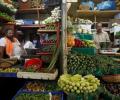
While rising food inflation is a matter of grave concern for a significant chunk of the population and for policy makers as well, it marks a turnaround in the fortunes of the farmer, reports Sanjeeb Mukherjee.
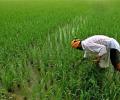
A pick-up in farmer income could have a cascading impact on the rural economy, though agriculture is becoming a smaller part of India's overall rural incomes.

Measures that quickly boost demand and increase employment are needed to push up growth. Moreover, without announcing new planss, the government should strengthen schemes such as PM KISAN, MNREGA and programmes to build rural roads.
The states that witnessed high CPI-based inflation rates were Lakshadweep, Tripura, Odisha, Uttar Pradesh, Kerala, Madhya Pradesh, Puducherry, Tamil Nadu, Rajasthan, Manipur and Mizoram.
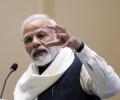
Starting today, Modi and top officials in the Prime Minister's Office will be briefed by various central ministries and departments on their plans as well as agenda for the next five years. They will also apprise the PMO of the work they have done so far in realising the agenda of government's second term in office.
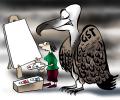
E-invoicing would be implemented on a voluntary basis by those having an annual turnover of above Rs 500 crore from January 1.

In 2009, the UPA government, had announced a slew of measures to boost liquidity in NBFCs. These included a scheme for providing liquidity support to NBFCs having assets size of over Rs 100 crore through a SPV.

To propel demand, one should concentrate on indirect taxes and bring down the goods and services tax (GST) rates to a uniform 12 per cent as the Vijay Kelkar panel had recommended, said Ajit Ranade, chief economist at Aditya Birla Group.

The new restriction will be challenging for businesses, as they will have to do regular follow-ups with their suppliers.
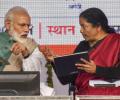
In the 2020-21 Budget, the prime minister and the finance minister are keen to stamp their narrative, after various rollbacks following the previous Budget, said top government sources. Besides the scheduled meetings, the sources said, the Prime Minister's Office is expected to hold several meetings with top secretaries and officials on various ongoing schemes, their performance and also how some of them could be tweaked for better results.
 © 2026 Rediff.com - Advertise with us - Disclaimer - Privacy Policy - Sitemap - Feedback - About us - Terms of use - Grievances